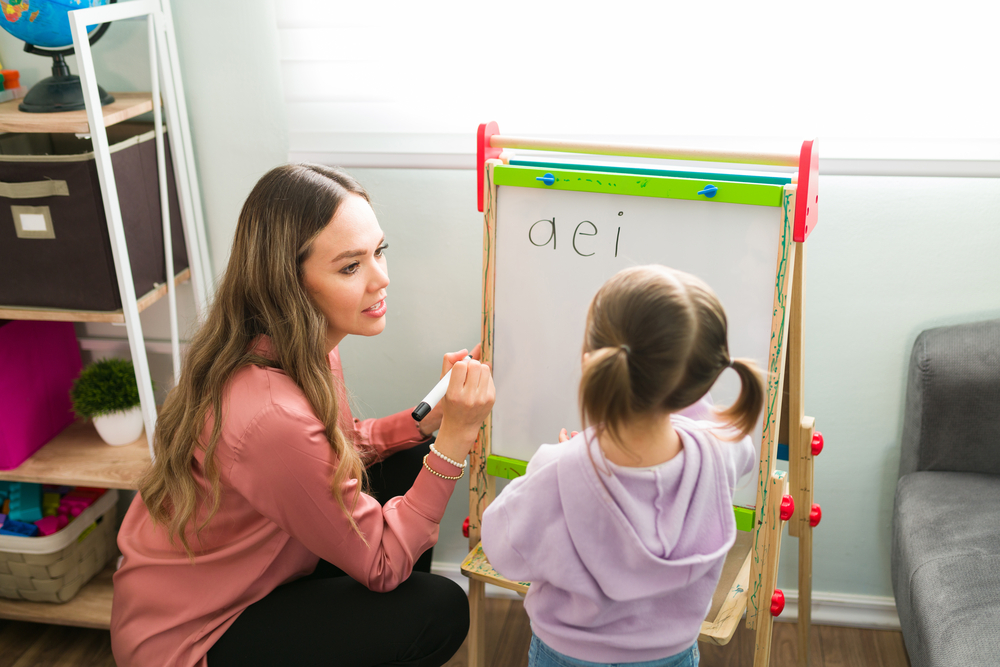
Rhyming words for kindergartners are much more than just fun to say. They are a fundamental building block for earlliteracy. Understanding rhyme is an essential skill that acts as a powerful predictor of future reading and writing success.
This guide will explore why the seemingly simple act of matching word sounds (like “hat” and “mat”) is so crucial for young learners and how you can use those rhyming words to make learning fun.
Rhyming words for kindergartners are two or more words that share the same ending sound. In a more technical sense, they’re words whose final vowel sound and all the sounds that follow are identical.
For example, in the words bat and mat, the final /a/ and /t/ sounds are the same. The first sound is different, but the final syllable is a perfect match. In fact, bat and mat are members of a long list of words called perfect rhymes that are pleasing to the ear and helpful for learning.
Rhyming words for kindergartners are two or more words that share the same ending sound. In a more technical sense, they’re words whose final vowel sound and all the sounds that follow are identical.
For example, in the words bat and mat, the final /a/ and /t/ sounds are the same. The first sound is different, but the final syllable is a perfect match. In fact, bat and mat are members of a long list of words called perfect rhymes that are pleasing to the ear and helpful for learning.
Understanding what makes these and other words rhyme is part of the foundation of becoming a better reader and speller…